 Image 1 of 1
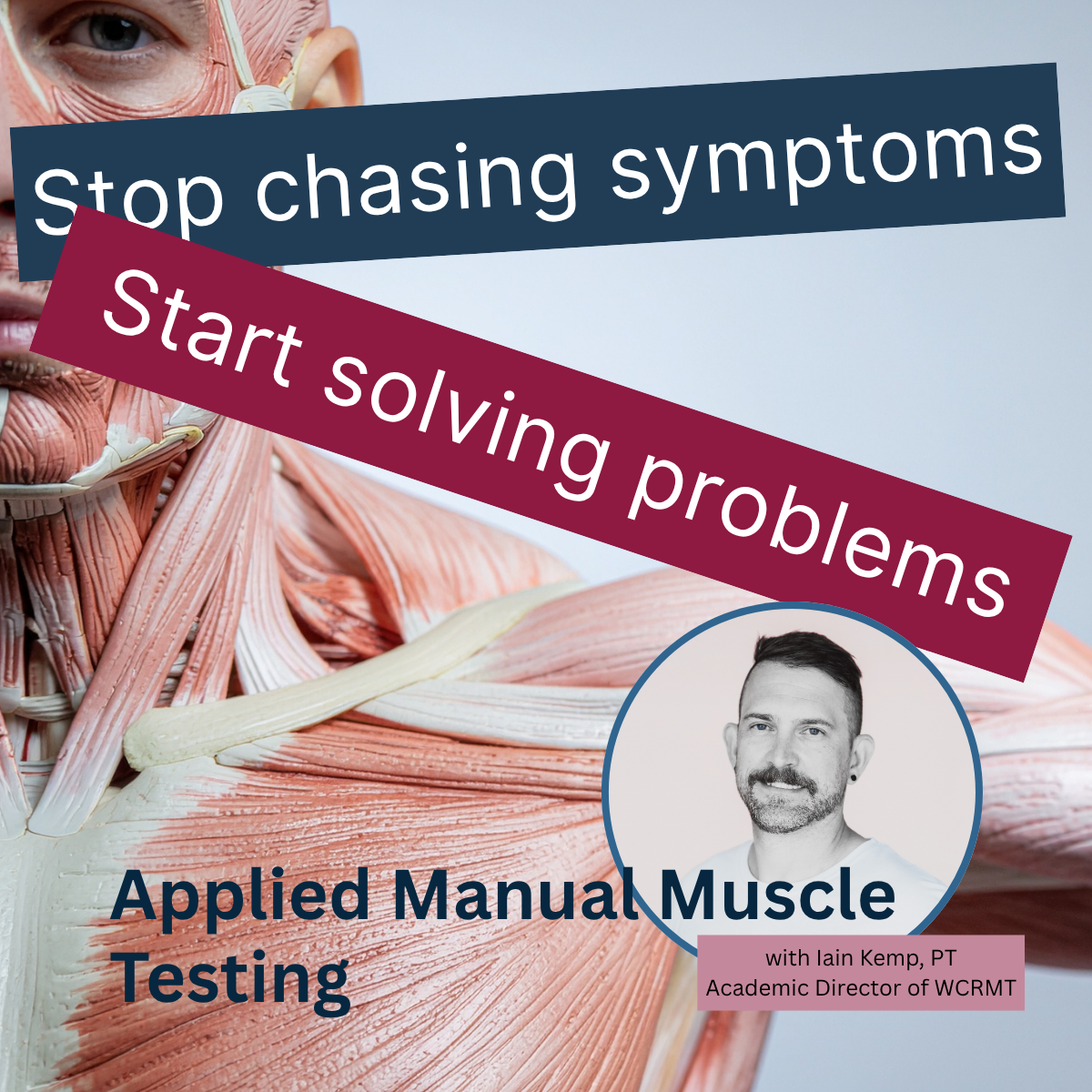
This hands-on continuing education course introduces a modern, brain-based approach to manual muscle testing that extends beyond traditional “tight vs. weak” models. Rather than focusing solely on muscles and tissues, this course presents manual muscle testing as part of a broader clinical assessment framework designed to reduce guesswork and improve decision-making in practice.
Drawing from contemporary neuroscience, applied neurology, and movement-based rehabilitation, participants will learn how to identify the drivers of dysfunctional movement patterns and understand why compensatory strategies emerge. Emphasis is placed on moving beyond reductionist, tissue-based thinking toward a more integrated view of the person and the nervous system that governs movement and perception.
Through a combination of lecture and hands-on application, participants will develop practical skills in performing reliable muscle tests, interpreting findings within a clinical reasoning model, and applying targeted interventions based on sensory, structural, and neurological influences. Attendees will learn how to assess, intervene, and re-test in real time, and integrate findings into meaningful movement strategies that support lasting change.
This course emphasizes understanding the why behind movement patterns, allowing clinicians to intervene with greater precision and confidence.
Dates: Saturday, July 11, 2026 (8:00am -3:00pm) - Sunday, July 12, 2026 (8:00am-12:00pm)
Location: Wellington College, 435 Berry Street, Winnipeg, MB
How the nervous system organizes movement & drives compensation patterns
Reliable, repeatable manual muscle testing techniques
How to assess the drivers of dysfunction (structural, sensory, neurological, etc.)
How to use indicator muscles & sensory challenges to guide assessment
Practical strategies to assess → intervene → re-test
How to move beyond symptom-based care
How to integrate findings into meaningful, patient-centered movement strategies
PT, AT, DC, OT, DOMP, DO, RMT, & other movement-based clinicians Students looking to build stronger assessment & clinical reasoning skills Practitioners who want to move beyond symptom-based treatment Clinicians interested in a more integrated, nervous system–driven approach to care
Upon completion of this course, participants will be able to:
1. Explain the role of the nervous system in organizing movement, including the relationship between sensory input, motor output, and adaptive compensation.
2. Differentiate between traditional orthopaedic manual muscle testing and applied, neurologically informed muscle testing approaches.
3. Demonstrate reliable manual muscle testing techniques, including appropriate positioning, stabilization, and application of resistance.
4. Identify patterns of muscle facilitation and inhibition and interpret these findings within a broader clinical reasoning framework.
5. Apply the concept of “drivers” of dysfunction by exploring structural, sensory, neurological, physiological, and cognitive contributors to altered movement patterns.
6. Utilize indicator muscles and sensory challenges (e.g., therapy localization, movement, sensory input) to assess changes in neuromuscular output.
7. Develop clinical decision-making strategies that move beyond symptom-based treatment toward identifying and addressing underlying contributors to dysfunction.
8. Implement targeted intervention strategies based on assessment findings, including manual therapy, sensory input, and movement-based approaches.
9. Reassess and interpret changes in muscle function and movement patterns following intervention to guide ongoing treatment.
10. Integrate assessment findings into meaningful, patient-centered movement strategies to support long-term functional outcomes.
This hands-on continuing education course introduces a modern, brain-based approach to manual muscle testing that extends beyond traditional “tight vs. weak” models. Rather than focusing solely on muscles and tissues, this course presents manual muscle testing as part of a broader clinical assessment framework designed to reduce guesswork and improve decision-making in practice.
Drawing from contemporary neuroscience, applied neurology, and movement-based rehabilitation, participants will learn how to identify the drivers of dysfunctional movement patterns and understand why compensatory strategies emerge. Emphasis is placed on moving beyond reductionist, tissue-based thinking toward a more integrated view of the person and the nervous system that governs movement and perception.
Through a combination of lecture and hands-on application, participants will develop practical skills in performing reliable muscle tests, interpreting findings within a clinical reasoning model, and applying targeted interventions based on sensory, structural, and neurological influences. Attendees will learn how to assess, intervene, and re-test in real time, and integrate findings into meaningful movement strategies that support lasting change.
This course emphasizes understanding the why behind movement patterns, allowing clinicians to intervene with greater precision and confidence.
Dates: Saturday, July 11, 2026 (8:00am -3:00pm) - Sunday, July 12, 2026 (8:00am-12:00pm)
Location: Wellington College, 435 Berry Street, Winnipeg, MB
How the nervous system organizes movement & drives compensation patterns
Reliable, repeatable manual muscle testing techniques
How to assess the drivers of dysfunction (structural, sensory, neurological, etc.)
How to use indicator muscles & sensory challenges to guide assessment
Practical strategies to assess → intervene → re-test
How to move beyond symptom-based care
How to integrate findings into meaningful, patient-centered movement strategies
PT, AT, DC, OT, DOMP, DO, RMT, & other movement-based clinicians Students looking to build stronger assessment & clinical reasoning skills Practitioners who want to move beyond symptom-based treatment Clinicians interested in a more integrated, nervous system–driven approach to care
Upon completion of this course, participants will be able to:
1. Explain the role of the nervous system in organizing movement, including the relationship between sensory input, motor output, and adaptive compensation.
2. Differentiate between traditional orthopaedic manual muscle testing and applied, neurologically informed muscle testing approaches.
3. Demonstrate reliable manual muscle testing techniques, including appropriate positioning, stabilization, and application of resistance.
4. Identify patterns of muscle facilitation and inhibition and interpret these findings within a broader clinical reasoning framework.
5. Apply the concept of “drivers” of dysfunction by exploring structural, sensory, neurological, physiological, and cognitive contributors to altered movement patterns.
6. Utilize indicator muscles and sensory challenges (e.g., therapy localization, movement, sensory input) to assess changes in neuromuscular output.
7. Develop clinical decision-making strategies that move beyond symptom-based treatment toward identifying and addressing underlying contributors to dysfunction.
8. Implement targeted intervention strategies based on assessment findings, including manual therapy, sensory input, and movement-based approaches.
9. Reassess and interpret changes in muscle function and movement patterns following intervention to guide ongoing treatment.
10. Integrate assessment findings into meaningful, patient-centered movement strategies to support long-term functional outcomes.