

Where standards are set
Wellington College - Winnipeg Campus
Winnipeg is the flagship campus of Wellington College — the place where our standards were forged, refined, and upheld year after year.
This is where disciplined training meets clinical precision, and where generations of graduates have built careers that elevate the profession across Manitoba and beyond.
Our Winnipeg alumni don’t just practice massage therapy — they carry the reputation of an institution known for competence, integrity, and clinical excellence. If you are ready to train at the campus that defines the benchmark, your journey begins here.
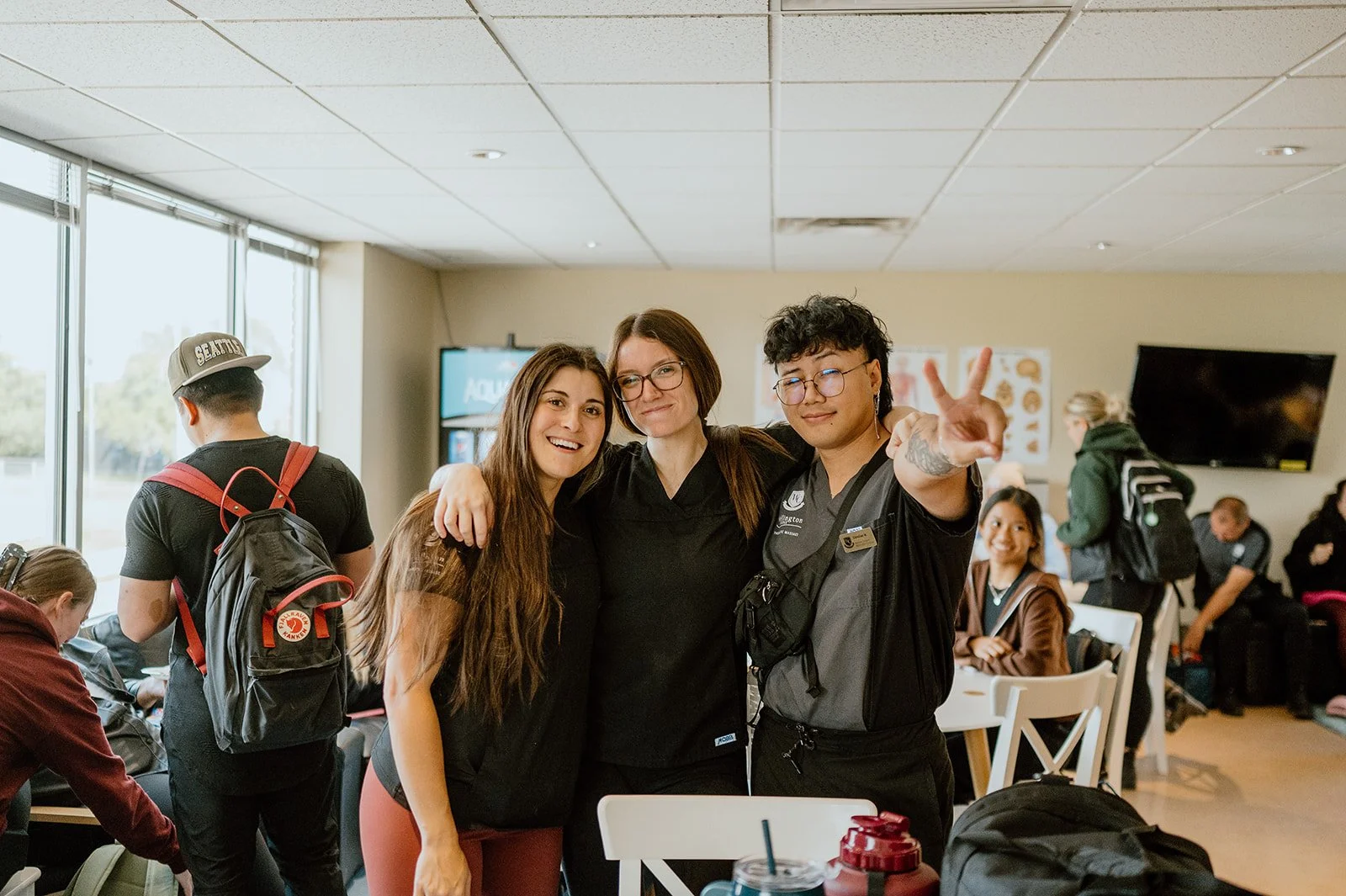
Wellington College — Winnipeg Campus
-
The Winnipeg weekday program is built for students who want structure, guidance, and a focused learning environment while completing their professional massage therapy education.
Students attend classes on campus four days per week, where theory is delivered in person by experienced instructors who actively facilitate discussion, applied learning activities, and hands-on integration. Practical training is fully supported in a supervised classroom setting, ensuring students develop both clinical competence and professional confidence. This format emphasizes accountability, consistency, and direct mentorship throughout the program.
It is best suited for learners who benefit from instructor support, scheduled class time, and a clearly guided educational path.
Program Structure Highlights
In-person theory instruction delivered by faculty
Interactive classroom activities and structured learning environments
Supervised practical training integrated throughout the program
Ongoing instructor guidance and academic accountability
Consistent weekly schedule on campus (four days per week)
Best For
Students beginning their first professional career
Individuals returning to the workforce or upgrading skills
Learners who thrive with structure and routine
Neurodiverse students or those who benefit from guided instruction
Students seeking strong mentorship and academic accountability
Year 1 Program Fees
Tuition and Compulsory: $12,215.48
Learning Resources: $1,317.65
Compulsory Fees and TCF: $261.08
Year 2 Program Fees
Tuition and Compulsory: $13,433.75
Learning Resources: $263.27
Compulsory Fees and TCF: $267.17
-
The weekend massage therapy program is designed for motivated learners who require maximum scheduling flexibility while completing a rigorous professional education.
Instruction is delivered through scheduled weekend intensives that focus on hands-on practical skills, clinical application, and direct instructor guidance during in-person sessions. Theory components are delivered online through evening classes twice a month.
Because learning is concentrated into fewer, longer sessions, this program demands strong time management, consistent self-study between weekends, and the ability to integrate feedback efficiently. Students are expected to take responsibility for maintaining their progress and meeting all academic and clinical requirements between in-person sessions.
In addition to weekend classes, students complete required student clinic shifts to build real-world experience in assessment, treatment planning, and professional communication.
Program structure highlights:
In-person practical instruction delivered in scheduled weekend intensives
Online theory study completed between weekends
Supervised student clinic shifts
Focused, hands-on learning with clear performance expectations
Best for:
Working professionals
Parents or caregivers
Students who prefer immersive, hands-on weekend learning
Learners who can manage independent study between scheduled sessions
Year 1 Program Fees
Tuition and Compulsory: $12,215.48
Learning Resources: $1,317.65
Compulsory Fees and TCF: $261.08
Year 2 Program Fees
Tuition and Compulsory: $6,716.88
Learning Resources: $263.27
Compulsory Fees and TCF: $233.58
Year 2 Program Fees
Tuition and Compulsory: $6,716.89
Learning Resources: $197.79
Compulsory Fees and TCF: $233.58
Weekday and Weekend Program Start Date: August 10, 2026
Weekday Program End Date: June 18, 2027
Weekend Program End Date: June 20, 2027
Application Deadline: July 31, 2026
Late Application Deadline: August 17, 2026
Late applications incur an extra $100 fee, collected in the tuition deposit.
Our Process
Application
Submit your application to confirm your eligibility and provide the information required for admission consideration.
Interview
Meet with our admissions team online to discuss your interest in massage therapy, readiness for the program, and whether you have the personal support and funding needed to succeed.
Enrolment
Secure your seat by completing your enrolment contract and confirming your commitment to the program.
Orientation
Connect with your cohort, review program expectations, and get oriented to the structure, systems, and responsibilities before classes begin.
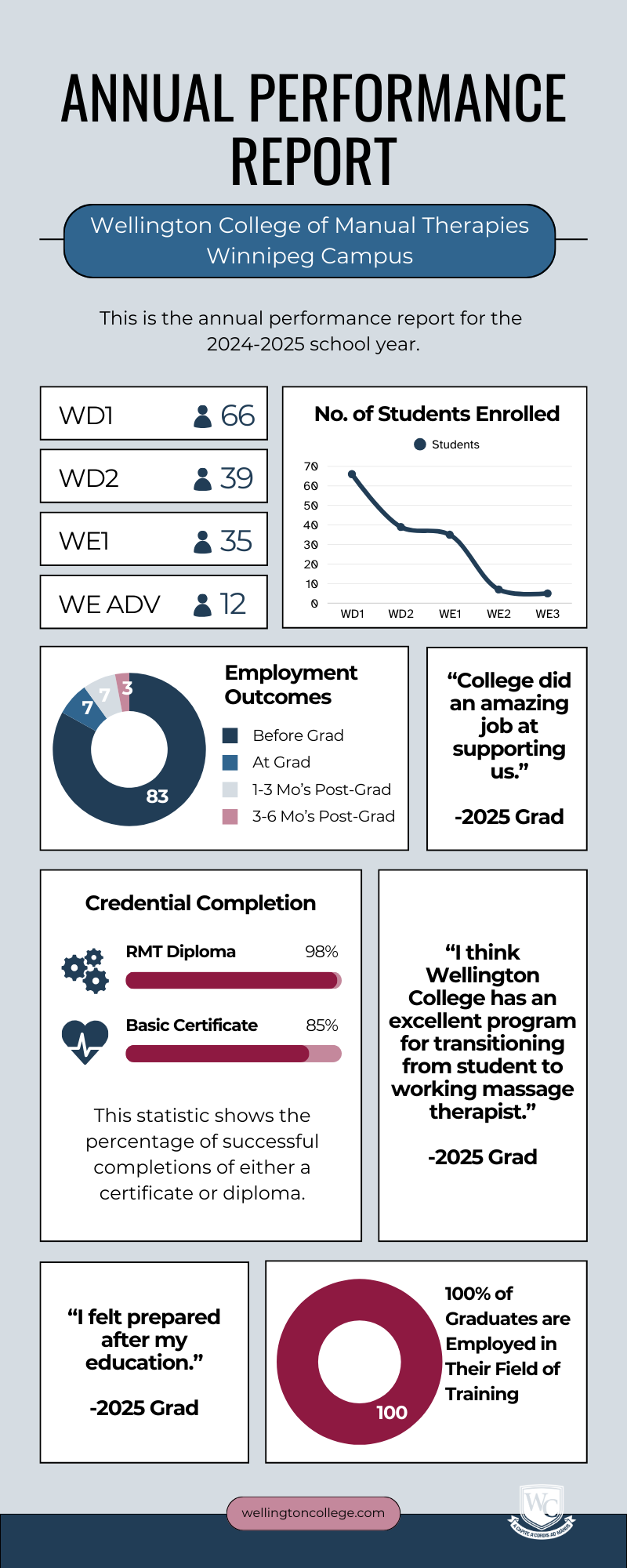
important policies
-
Refunds to students
26 A private vocational institution must refund all money received or realized in respect of a student being enrolled in a program of instruction it provides if
(a) the registration of the registrant to operate the institution is cancelled; or
(b) the institution
(i) ceases to provide instruction in the program while the student is still enrolled, or
(ii) expels the student without cause.
Providing training without registration
27 A person who provides a program of instruction before being registered as a registrant must refund all fees that have been paid in respect of the vocational training.
Refunds re actions of students
28(1) Subject to section 16 of the Act, the private vocational institution must refund the following fees:
(a) if the student ceases to be enrolled before the start date of the program, all money received or realized in respect of the program except any non-refundable fees specified as required under subclause 11(1)(d)(iv);
(b) if the student ceases to be enrolled after the start date of the program, the percentage of paid tuition fees set out in first column of the following table based on the percentage of the program completed by the student at the time the student ceases to be enrolled as set out opposite in the second column:
Percentage of paid tuition fees refunded
Percentage of program completed at time the student ceases to be enrolled 75% of paid tuition fees refunded Up to 20% 50% of paid tuition fees refunded 21% to 50% No tuition fees refunded 51% or more
28(2) In determining the percentage of the program completed at the time the student ceases to be enrolled,
(a) each assignment and each hour or class in a program of instruction is of equal value; and
(b) a student is deemed to have attended every regularly scheduled hour of instruction or, in the case of a program provided by correspondence or other means, to have submitted each regularly scheduled assignment until the day immediately before the date the student ceases to be enrolled.
Refund of materials fee
29(1) Subject to subsection (2), a private vocational institution must refund any materials fe e when a student rescinds their contract under section 16 of the Act or when a student ceases to b e enrolled in the program of instruction if the student returns the materials to the institution
(a) within 10 days after ceasing to be enrolled in the program; and
(b) in substantially the same condition as the materials were in when they were received by the student.
29(2) A materials fee is not refundable for materials that
(a) are personal use items; or
(b) have been removed from their packaging.
29(3) For certainty, a digital version of a book or text is eligible for a refund if the code used to access its contents has not been used.
Non-refundable fees
30 Except as provided under section 16 of the Act, a student is not entitled to a refund of
(a) a registration fee; or
(b) in the case of an international student, the international student administration fee under subclause 11(1)(d)(v) of their student contract.
When student ceases to be enrolled
31 Under this regulation, a student ceases to be enrolled in a program of instruction on the earliest of the date that
(a) the private vocational institution
(i) receives the student's written notice of withdrawal from the program of instruction,
(ii) cancels the student's enrolment under section 32, or
(iii) expels the student from their program of instruction; or
(b) the student
(i) exceeds the number of absences allowed under the private vocational institution's attendance policy, or
(ii) graduates from the institution.
Payment of refunds
33(1) Subject to subsection (2), if a student is entitled to a refund from a private vocational institution, the refund must be paid directly to th e student.
33(2) If a student is entitled to a refund and the institution received any payment of the student's fees from a government program, an agency or a person other than the student, the institution must pay th e refund, on the student's behalf, to the government, agency or other person.
33(3) The institution must issue a refund payment within 30 days after the refund becomes payable.
-
This policy applies to all members of the Wellington College community, including clients, students, staff, former staff, faculty, administrators, contract service providers, contractors, officers, directors, and individuals who are directly connected to any student initiatives, volunteers and visitors.
Purpose and Intent
This policy aims to inform all Wellington College community members that they have a right to study and work in an environment free of sexual violence and sexual harassment.
The College recognizes that certain populations are at greater risk of sexual violence in Canada, including:
Young women and girls
Indigenous women
Women living with cognitive or physical disabilities
Individuals within the LGBT2SQ+ community
Newcomer women and women from ethnocultural and racialized communities
We also recognize that clients visiting our clinics and outreach locations are also members of our community are a vulnerable population.
We recognize that these groups make up a portion of the students attending Wellington College. We want to emphasize that we aim to ensure a positive learning environment for all our students, regardless of what population they may belong to. To address this, we have called upon members from all populations in the development of this policy. The College asks that all members of our community participate in the survey. The College circulates in September and February each year to ensure that we address their concerns.
This document sets out our policy on sexual violence and sexual harassment, defines the prohibited behaviours, and outlines our inquiry processes for sexual violence and sexual harassment. The policy further outlines the institution’s procedures to educate its community on avenues to prevent sexual harassment.
Definitions
Consent; “The voluntary agreement to engage in sexual activity.”
Consent: The Criminal Code of Canada defines consent as it relates to sexual assault as the voluntary agreement to engage in sexual activity. An individual must actively and willingly give consent to sexual activity. Simply stated, sexual activity without consent is sexual assault.
Consenting to one kind, or instance, of sexual activity does not mean that consent is given to any other sexual activity or instance. No one consents to be sexually assaulted.
Where consent does not exist (lack of agreement), a person can express a lack of agreement verbally or through conduct (such as physically resisting advances). The Criminal Code makes it clear that a person can, after initially giving consent to engage in sex, revoke consent at any time by expressing a lack of agreement to continue engaging in sexual activity.
In other words, consent…
Is never assumed or implied
Is not silence or the absence of “no”
Cannot be given if the victim is impaired by alcohol or drugs, or is unconscious
Can never be obtained through threats or coercion
Can be revoked at any time
Cannot be obtained if the perpetrator abuses a position of trust, power or authority
It is not for the institution to weigh or determine whether or not consent has been given. The purpose of this policy is not to examine or investigate sexual assault allegations, but rather to inform all members of the College community of their responsibility to eliminate harassment and inform victims of their rights. For more information on consent, please also refer to http://www.gov.mb.ca/youarenotalone/consent.html
Cyber Harassment/ Cyberstalking: Often used interchangeably, cyber harassment and cyber stalking are defined as repeated, unsolicited, threatening behaviour by a person or group using a cellphone or internet technology with the intent to bully, harass, and intimidate a victim. The harassment can occur in any electronic environment where communication with others is possible, such as on social networking sites, message boards, chat rooms, text messages, or email.
Date Rape: The term “date rape” is interchangeable with “acquaintance sexual assault”. It is sexual contact that is forced, manipulated, or coerced by a partner, friend, or acquaintance.
Disclosure: For the purposes of this document, a disclosure is made to any individual other than the police or other judicial official.
LGBT2SQ+: The LGBT2SQ+ community includes people who identify as lesbian, gay, bisexual, transgender, Two-Spirit, queer, questioning, intersex, asexual, pansexual and/or gender fluid.
Rape: Rape is a term used to describe vaginal, oral, or anal intercourse, without consent. Although the term is no longer used in a legal sense in Canada, it is still commonly used and widely understood.
Sexual Assault: Sexual assault is any type of unwanted sexual act done by one person to another that violates the sexual integrity of the victim. Sexual assault is characterized by a broad range of behaviours that involve the use of force, threats, or control towards a person, which makes that person feel uncomfortable, distressed, frightened, threatened, carried out in circumstances in which the person has not freely agreed, consented to, or is incapable of consenting to Sexual assault is a crime.
Sexual Violence: Any sexual act or act targeting a person's sexuality, gender identity or gender expression — whether the act is physical or psychological in nature — that is committed, threatened or attempted against a person without the person's consent, and includes sexual assault, sexual harassment, stalking, indecent exposure, voyeurism and sexual exploitation.
Sexual Harassment: Without limiting the generality of what has already been mentioned, sexual harassment includes any course of vexatious comment or conduct of a sexual nature that is known or thought reasonably to have been known to be unwelcome.
This includes but is not limited to, the following:
Offensive jokes or comments of a sexual nature;
Displaying of pornographic or sexist pictures or materials, including online;
Suggestive or offensive remarks;
Unwelcome language related to gender;
Remarks, jokes, innuendoes, propositions, or taunting about a person’s body, attire, sex or sexual orientation;
Leering or inappropriate staring ;
Bragging about sexual prowess;
Physical contact such as touching, patting, or pinching, with an underlying sexual connotation; and
Sexual solicitation or advance made by a person in a position to confer, grant or deny a benefit or advancement to the person where the person making the solicitation or advance knows or ought reasonably to know that it is unwelcome.
Stalking: Stalking is a crime called criminal harassment. Stalking consists of repeated behaviour that is carried out over a period of time, and which causes a person to reasonably fear for their safety.
Victim Blaming: Victim blaming occurs when the victim of a crime or an accident is held responsible — in whole or in part — for the crimes committed against them.
Policy Objectives
Our college is committed to providing members of our community an educational environment free from sexual violence and sexual harassment and treating those individuals who report incidents of sexual violence or sexual harassment with dignity and respect.
The College recognizes the sensitive nature of sexual harassment of any form and wishes to assure all members of our community are aware that we wish to approach any such sharing of information with compassion and understanding. We will address any reports of sexual harassment as being true and act upon them in accordance with this policy. This policy does not supersede collective agreements.
It is the Colleges intent to provide a supportive role and assist the individual by way of the following:
Educating all members of our community on sexual harassment and prevention.
Listening to complaints/disclosures and responding in a sensitive and understanding manner.
Providing information to the student about the institution’s response procedure.
Offering information or making referrals to support service providers with experience addressing sexual assault and trauma; and
Providing the individual with reasonable accommodation while on campus.
Staff Awareness
Wellington College will hold an annual training session for our faculty and staff about this policy. They will be trained on how to identify situations that involve or could progress into sexual violence or sexual harassment and how to reduce these forms of prohibited behaviours.
This training will include:
What is sexual violence and harassment
What is consent?
Reporting policies and procedures
Sexual violence and the role of social media
The HR department will participate annually in the MACC training program provided by Klinic. There are situations in which the person who normally has responsibility for oversight of the policy should not be involved in investigating or responding to an incident of sexual harassment due to a conflict of interest or a close relationship with the respondent. In that case, another trained person will be put in place.
Student Awareness
Due to the nature of massage therapy, there is a higher chance of sexual harassment occurring than in other fields. Because of this, the college requires all students to participate in education and training dedicated to sexual harassment and violence. This includes but is not limited to:
At orientation each year, this policy is presented to the students as a part of their student handbook.
The College requires the student to read the sexual harassment policy as part of their yearly contract.
Posters and pamphlets are distributed throughout the college to make students aware of appropriate and inappropriate sexual conduct as well as sexual harassment prevention.
Students are required to complete an online course on workplace harassment as well as a presentation by an expert in the field of sexual harassment.
The policy is integrated into the instruction of our psychology, practical application, clinical and outreach training.
The college ensures that all students have access to the policy by posting it on the college website wellingtoncollege.com/sexual-harassment-policy.
Public Awareness
The college will provide this policy to those from the public who interact with our community. This includes external contractors, service providers and clinic clients. This will take the form of a pamphlet that outlines the policy and can be easily distributed and read through. We will also promote public awareness by the following methods:
Awareness through our social media and digital media outlets
Posters in our student clinic waiting room and treatment rooms
Prevention
Our prevention strategies are not focused on how potential victims should protect themselves, but rather what actions can be taken to change perpetrator behaviour. These strategies include:
Awareness posters in each of our treatment rooms and the waiting area of the student clinic.
Messages from our leadership during Orientation and Momentum Weeks that are clear about expectations and set the tone for College action.
Complete an annual Crime Prevention Through Environmental Design audit.
How to Report an Incident of Sexual Harassment or Violence
There are a number of ways to report an incident of sexual harassment or violence. In all reports the offender will be notified through an in-person meeting with the HR department.
Anonymous Report
A victim who wishes to remain anonymous may submit an anonymous report to the HR department. This can be done by email, phone conversation, written report or in-person conversation. The victim will remain anonymous, and either the informal or formal reporting process will be completed on their behalf, depending on their wishes.
Where the victim of a report is not identified, it will be taken to the HR department, which will determine the appropriate action. This will be one of three outcomes:
Initiate an internal investigation.
Outsource the investigation to a third-party agency or police.
Informal Report
A victim who makes an informal report may not initially want to make a formal report, but emotional support through the crisis. Sexual harassment or violence is shared because the victim wants emotional or medical support and advocacy, but not to report to the police.
Bring your experience to the attention of a staff person you trust. This can be an instructor, student liaison, director or counsellor.
What to expect after you make an informal report:
You will be listened to with no judgment and compassion.
You will be provided with the contact information of our college counsellor, and an appointment can be made for you if you wish.
If you require medical support, you can be accompanied by a staff member of your choosing to the appropriate medical facility. Otherwise, you will be given the information for a medical facility that can address your needs.
You will be provided with information and resources to process the crisis.
You will not be left alone in this initial revealing.
Formal Report
A formal complaint is made when the victim wants action to be taken, whether that be by involving a third-party, legal action, or changes to their learning environment.
To raise a formal complaint, bring your experience to the attention of a staff person you trust. This can be an instructor, student liaison, director, or counsellor.
The victim will be listened to without judgment and provided with the resources needed to process sexual harassment or violence.
That staff person will make HR aware of the incident, and a formal complaint will be documented. In the case that a person in the HR department is involved in the offence, a secondary representative will be assigned to the documentation and investigation.
Together with an HR representative, the victim will decide the next action to be taken – involving a third party, taking legal action or making a change to their learning environment.
What to expect when you make a formal report:
You will be listened to with no judgment and compassion.
You will document an incident report with the HR department. (See Appendix 2)
You will be provided with the contact information of our college counsellor, and an appointment can be made for you if you wish.
If you require medical support, you can be accompanied by a staff member of your choosing to the appropriate medical facility. Otherwise, you will be given the information for a medical facility that can address your needs.
You will be provided with information and resources to process the crisis.
You will decide the next actions to take with the HR department and whether they will act on your behalf to initiate the investigation.
If legal action is to be taken, the College can provide a supportive role by providing contact information and assisting with the initial communication to the appropriate contact.
If the accusation of sexual harassment is made against a member of the college staff, the individual will immediately be placed on leave until such time as the inquiry process may be completed.
Outcomes
If it is determined by the College that a member of our community has been involved in sexual violence or sexual harassment, immediate disciplinary or corrective action will be taken up to and including termination of employment or expulsion of a student.
In cases where criminal proceedings are initiated, the College will assist police agencies, lawyers, insurance companies, and courts to the fullest extent. Where criminal and/or civil proceedings are commenced in respect of allegations of sexual violence or sexual harassment, the College may conduct its own independent inquiry and make its own determination in accordance with its own policies and procedures.
Making False Statements
It is a violation of this Policy for anyone to knowingly make a false complaint of sexual violence or sexual harassment or to provide false information about a complaint. Individuals who violate this Policy are subject to disciplinary and/or corrective action, up to and including termination of employment or expulsion.
Reprisal
It is a violation of this Policy to retaliate or threaten to retaliate against a complainant, acting in good faith, which has brought forward a complaint of sexual violence or sexual harassment, provided information related to a complaint, or otherwise been involved in the complaint inquiry process.
Public Reporting
The College will make the student body and public aware of its compliance with the policy by stating on its website and in printed matters the following:
The list of staff that students may contact regarding any complaints of sexual misconduct or harassment, including contact information.
The dates of workshops relating to sexual harassment, confidentiality and harassment awareness for both staff and students, reporting the number of attendees.
The dates of sharing circle opportunities for those wishing to follow traditional sharing circle procedures with Wellington College Elders.
The number of complaints, third party and anonymous reports, and investigations
The number of cases concluded with disciplinary measures
The number of cases suspended along with why they were suspended
The number of cases addressed through alternative resolutions or informal measures
Interim Measures
The use of interim measures during an investigation protects the survivors and safeguards the campus community while an investigation or other procedure is taking place. These measures are about community safety and not about discipline. These interim measures can be implemented even if a formal report has not been filed.
Interim measures are those services, accommodations, or other assistance that the college puts in place for victims after receiving notice of alleged sexual misconduct but before any final outcomes – investigatory, disciplinary, or remedial – have been determined. We want students to be safe, receive appropriate medical attention, get the help they need to heal, and continue accessing their educational opportunities. We also want students to understand their reporting options and how to access available interim measures.
The College recognizes that sexual violence is traumatic and may leave victims feeling overwhelmed and confused. This policy seeks to provide clear guidance regarding available resources and who can help in securing them. Upon receiving a report of sexual misconduct, the College will provide the victim, or the victim’s counsellor or advocate, with a written explanation of the interim measures available on campus and through local community resources and shall ask victims, or their counsellors or advocates, what measures are sought.
Some possible interim measures are listed below, and the College determines which measures are appropriate for a particular victim on a case-by-case basis. Not all of the measures listed below will be necessary in every case to keep victims safe and ensure their equal access to educational programs and activities. If the victim or advocate identifies an interim measure that is not already provided by the College, the College will consider whether the request can be granted. In those instances where interim measures affect both a victim and the alleged perpetrator, the College will minimize the burden on the victim wherever appropriate.
A victim of sexual misconduct, or the victim’s counsellor or advocate, may request the interim measures listed below. The College – after consulting with the victim or the victim’s counsellor or advocate – will determine which measures are appropriate to ensure the victim’s safety and equal access to educational programs and activities:
Academic accommodations (for additional information, see below)
Medical and mental health services, including counselling
Assistance in finding alternative housing
Assistance in arranging for alternative College employment arrangements and/or changing work schedules
A “No contact” directive pending the outcome of an investigation. Such a directive serves as notice to both parties that they must not have verbal, electronic, written, or third party communication with one another
Providing an escort to ensure that the student can move safely between school programs and activities
Transportation accommodations, such as shuttle service, cab voucher, or parking arrangements to ensure safety and access to other services
Assistance identifying an advocate to help secure additional resources or assistance including off-campus and community advocacy, support, and services
The College will work with victims or their counsellors or advocates to identify what interim measures are appropriate in the short term (e.g., during the pendency of an investigation or other school response) and will continue to work collaboratively throughout the College’s process and as needed thereafter to assess whether the instituted measures are effective and if not, what additional or different measures are necessary to keep the victim safe.
As explained below, when a victim’s counsellor or advocate requests any of the above measures on the victim’s behalf without disclosing that sexual misconduct is the basis for the request, the College will consider these requests for supportive measures consistent with its general policy of allowing counsellors and advocates to seek such measures for victims of trauma without requiring that the nature of the trauma be disclosed.
Academic Accommodations
Academic accommodations are one type of interim measure that the College may provide to a victim after receiving notice of alleged sexual misconduct to ensure that the victim is safe and can continue to access educational opportunities following alleged sexual misconduct.
To address the possible adverse effects of sexual misconduct on a victim’s academics, securing time-limited academic accommodations, such as rescheduling an exam, may be possible. If the victim experiences persistent academic difficulties because of the sexual misconduct (e.g., including difficulties stemming from anxiety, depression, post-traumatic stress disorder or any other mental or physical illnesses or injuries), the victim may request more long-term academic accommodations, such as temporary leave of absence.
If the victim does not have a treating provider but is suffering from health-related issues such as those identified above, the student should contact Brie Timings to be connected with a campus health provider or appropriate off-campus resource. Students may also be entitled to additional services and support if they have a disability, including those who developed a disability as a result of experiencing sexual misconduct.
Victims of sexual misconduct, or the victim’s counsellor or advocate, may request the following academic accommodations as interim measures. After consulting with the victim or the victim’s counsellor or advocate, the college will determine which accommodations are appropriate to ensure the student’s safety and equal access to educational programs and activities.
Requests for academic accommodations may include assistance in:
Transferring to another group or class where available
Rescheduling an academic assignment or test
Accessing academic support (e.g., tutoring)
Arranging for incompletes, a leave of absence, or withdrawal from campus
Options for Requesting Interim Measures or Supportive Measures
The College offers victims of sexual misconduct two options for reporting the misconduct and requesting interim measures. The first option allows the victim to report the misconduct to a College employee whom the College has designated as responsible for receiving and/or responding to reports of sexual misconduct and to request interim measures from these “responsible employees.”
The second option allows a victim who has not reported the misconduct to a responsible employee to disclose the misconduct to a professional counsellor, non-professional counsellor, or victim advocate, who in turn can request interim measures on the victim’s behalf from the College.
Under the second option, victims should be aware that when a counsellor or advocate requests interim measures on their behalf from a responsible employee of the College and discloses that the reason for the request is sexual misconduct, the request may trigger the HR department’s obligation to investigate. To the extent the counsellor or advocate makes such a disclosure, but, consistent with the victim’s wishes, asks that the College not investigate or otherwise notify the alleged perpetrator of the report, the HR department will consider whether it can honour the request while still providing a safe and non-discriminatory environment for all students, as set forth in the College’s Confidentiality Policy and take interim measures to protect the victim as necessary.
The College also offers victims an option for the victim’s counsellor or advocate to request supportive measures from the College without reporting the sexual misconduct to the College. While we strongly encourage all victims of sexual misconduct to report the incident to the College directly, we want victims to have access to supportive measures regardless of when or whether they decide to report the conduct to the College.
Option 1: Victims Who Report Sexual Misconduct to a Responsible Employee
Reports of sexual misconduct to responsible employees will be forwarded to the HR department who will determine what steps need to be taken. Generally, the College will investigate the report to determine what occurred and the College will provide interim measures during the investigative process and any disciplinary process. However, for victims who report sexual misconduct to responsible employees but request that the College not pursue an investigation or otherwise keep their report confidential (e.g., from the perpetrator), the HR department will consider whether it can honour the victim’s request while still providing a safe and non-discriminatory environment for all students. Whether the Title IX coordinator decides that the College can honor the confidentiality request or must pursue an investigation, the Title IX coordinator (or designee) will inform the victim of available interim measures and coordinate appropriate interim measures for the victim.
Options 2 and 3: Victims Who Disclose Sexual Misconduct to Professional Counselors, Non-Professional Counselors, and Victim Advocates
The College recognizes that counsellors and victim advocates are often in a unique position to know when and what interim measures or supportive measures would be most appropriate to address a victim’s health and safety needs. For this reason, victims who disclose incidents of sexual misconduct to their counsellors or victim advocates should discuss whether to have the counsellor or advocate report the misconduct to the College and request interim measures required by the HR department or request discretionary supportive measures from the College without reporting the nature of the conduct. The counsellor or advocate will work with the victim to determine what information the victim is willing to share with College employees involved in securing interim or supportive measures. The counsellor or advocate will explain how sharing certain information with responsible employees may trigger the HR department’s obligation to investigate.
If a formal complaint has been lodge, it is policy to suspend the accused until the investigation has been resolved.
Interim Measures
A counsellor or advocate may request that the College provide interim measures to a victim of sexual misconduct to protect the victim and ensure the victim’s equal access to the College’s educational programs and activities before the final outcome of any investigation. The counsellor or advocate may ask a victim who is seeking interim measures to sign a release specifying the information that may be shared with the College. After the counsellor or advocate informs the College that sexual misconduct is the basis for the request for interim measures, the College will work with these individuals to investigate the alleged sexual misconduct and determine what interim measures are appropriate. For example, the counsellor or advocate may ask the staff coordinator to arrange academic or living accommodations for the victim.
Supportive Measures
A counsellor or advocate may request that the College provide supportive measures for a student who has experienced trauma, including, but not limited to, trauma related to sexual misconduct. If a victim does not want the College to investigate the alleged sexual misconduct, the victim should discuss this with the counsellor or advocate. Counsellors and advocates should explain what type of requests will trigger the HR department’s obligations and discuss other avenues for securing supportive measures consistent with the victim’s wishes. For example, counsellors and advocates may request supportive measures from the College on behalf of a victim who does not want the College to pursue an investigation of the alleged sexual misconduct, and the College will consider these requests for supportive measures consistent with its general policy of providing supports to students who have experienced various forms of trauma without requiring their counsellor or advocate to reveal the nature of the underlying trauma to the College.
The College encourages victims of sexual misconduct to report the incident(s) and to seek help under the option above with which they feel most comfortable. If you have any questions about available interim measures or supportive measures, please contact Brie Timings, brie@wellingtoncollege.com.
If these interim measures are violated in any way, the victim will meet with the HR department to discuss the removal of those resources as deemed appropriate.
Interim measures will be reviewed within 5 business days of the report. The HR and Student Services departments are responsible for reviewing these measures.
Investigations, Adjudication and Sanctions
The HR department will be responsible for the institutional investigation; the main supervising contact for this department will be appointed as the investigator and their mandate will be to create a safe environment for all parties. The investigated must be culturally competent and trauma-informed through the training they will receive. Documents associated with the investigation, including Appendix 2 and any other relevant documentation, will be kept for 7 years in our electronic database. Only the HR department will have security rights to access those files.
Both respondents and complainants have the right to be represented during the investigation and adjudication process, including representation by their union if applicable.
Alternative to face-to-face meetings between the complainant and respondent are available, as well as other measures to reduce barriers to participation for the complainant. If a translator is needed, one will be provided by the College.
Both the complainant and respondent will receive a full copy of the report. It will also be kept on file in the College’s electronic database. Should requests for information be made by other parties, the permission to do so will be given in conference between the complainant, respondent and the HR department.
Appeals
Both the complainant and respondent may appeal the decision of the investigation. An appeal will be granted should the evidence presented since the investigation be substantiated. The appeal will only consider new evidence that has just come to light rather than simply reviewing the evidence put forward during the investigation.
Alternative Resolutions
This policy allows for restorative justice alternatives to a formal investigation. It ensures that any alternative resolution processes are initiated only upon request by the survivor. Alternative resolution processes can only be pursued with the fully informed consent of the respondent. In cases where restorative justice approaches are requested, specially trained facilitators will be made available. There is an allowance for movement between different processes so that the participants can decide whether the current process is working for them.
Policy Review
This policy was adapted from the policy generated by a committee formulated by the Manitoba Association of Career Colleges with input from member colleges. It was revised for the uses of Wellington College, presented to a volunteer committee of College students, and then circulated to the student body for review and comments. It was then adapted again with this review in mind.
The College has made every effort to obtain input from all members of the College community, including the more vulnerable sectors.
The policy will be reviewed annually before the first enrollment in July by a committee comprised of staff, students, alumni and the public. New directives will be implemented immediately. This policy is scheduled to be reviewed in January 2027.
-
Effective Date: August 1, 2026
Approved By: Director
Applies To: All enrolled students1. Purpose
To establish clear expectations for attendance, protect academic and clinical competency standards, and ensure consistent enforcement across all programs.
Massage therapy education requires sustained participation in theory, practical, and clinical instruction. Attendance is considered an essential component of academic progression.
2. Scope
This policy applies to:
All theory classes
Practical instruction
Clinic shifts
Specialty seminars or intensives
All instructional blocks within the academic year
3. Policy Statement
Students are expected to attend all scheduled classes and clinical components.
The College permits limited absences within defined thresholds. Absence privileges are not an entitlement and do not exempt students from meeting learning outcomes or clinical hour requirements.
4. Sick Days Allowance
Each Weekday student is permitted:
6 sick days per academic year without documentation.
Each Weekend student is permitted:
2 sick days per academic year without documentation.
The following conditions apply:
Sick days may not be used on:
Test or exam days
Specialty classes or intensive seminars
Use of sick days does not exempt the student from completing missed coursework or clinic requirements.
Students are not required to notify instructors directly. Attendance will be recorded by the instructor as absent.
5. Absence Thresholds
Absences are tracked by individual class sessions (instructional blocks).
Weekday Level 1:
Up to 18 total class absences per academic year
Considered excused.
No documentation required (within the first 6 sick days).
An automated email will be issued upon reaching 6 days total absences, informing the student that medical documentation will be required for future absences.
Weekday Level 2:
Next 12 class absences (19–30 total)
Require medical documentation for each additional absence.
Documentation must be submitted within 48 hours of return.
Failure to provide documentation will result in the absence being classified as unexcused and may trigger disciplinary review.
6. Pattern Rule (Consecutive Absence Escalation)
Attendance is evaluated not only by total number but by behavioural pattern.
Two consecutive absences in the same class:
Mandatory meeting with the instructor.
Next two consecutive absences in the same class:
Referred to Student Support (Michelle) for formal attendance review.
Next two consecutive absences in the same class:
Referred to the Director.
May result in suspension from the program.
An ongoing pattern following suspension will trigger a formal review for removal from the program.
Pattern escalation applies regardless of total absence count.
7. Academic Integrity of Attendance
Absences:
Do not exempt students from skill competency requirements.
Do not guarantee makeup opportunities.
May delay program progression if clinical hours or competencies are unmet.
8. Enforcement
Instructors are responsible for:
Accurate attendance tracking
Initiating Pattern Rule meetings
Student Support is responsible for:
Monitoring threshold alerts
Managing documentation review
Escalating repeated concerns
The Director retains authority for suspension or removal decisions.
9. Authority
This policy is enacted under the authority of the Director and supports regulatory requirements governing instructional hours, competency standards, and student progression.